

Vers le contenu des pages

Processeur multi-effets

  • 4 processeurs ARM quadricœurs - 16 DSPs
  • 1600 algorithmes
  • Possibilité de créer des chaînes d'effets complexes
  • Grand écran couleur
  • 8 indicateurs LED réglables
  • Audio USB 16 canaux
  • Jusqu'à 96 kHz
  • Contrôlable à distance via une application logicielle de contrôle à distance pour Mac/Windows et un plug-in DAW
  • 3 emplacements d'installation pour les extensions MADI et Dante optionnelles
  • Dimensions (L x H x P): 48,3 x 8,9 x 31,7 cm
  • Poids: 6,4 kg

Connexions:

  • 8 entrées ligne sur Sub-D 25
  • 2 entrées ligne sur XLR
  • 8 sorties ligne sur Sub-D 25
  • 2 sorties ligne sur XLR
  • Entrée/sortie AES/EBU
  • 4 ports USB
  • S/PDIF coaxial et optique / ADAT
  • Entrée/sortie Word Clock
  • MIDI In/Out/Thru
  • 2 entrées pour footswitch sur Jack 6,3 mm
  • Port Ethernet
  • Référencé depuis Octobre 2018
  • Numéro d'article 441712
  • Conditionnement (UVC) 1 Pièce(s)
  • Format Rack 19" Oui
  • Sauvegarde des effets Oui
  • MIDI Oui
  • Connexion pour pédale Oui
  • Entrées micro Non
7 777 €
Tous les prix TVA incl. (TTC)
Sur demande
1

La nouvelle génération d’Harmonizers

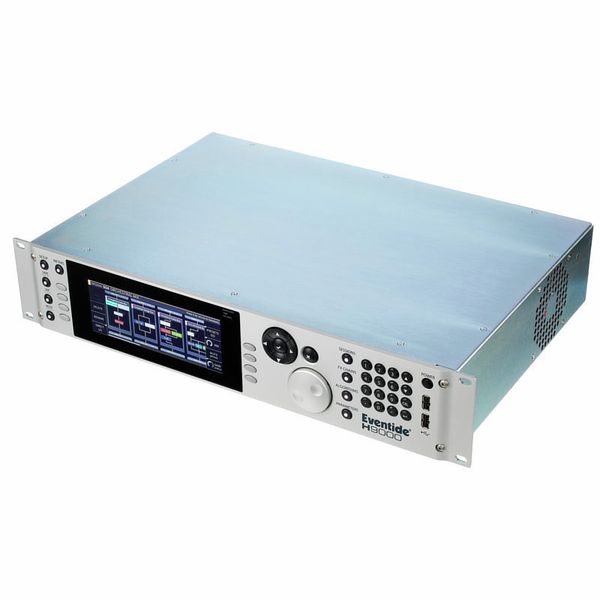
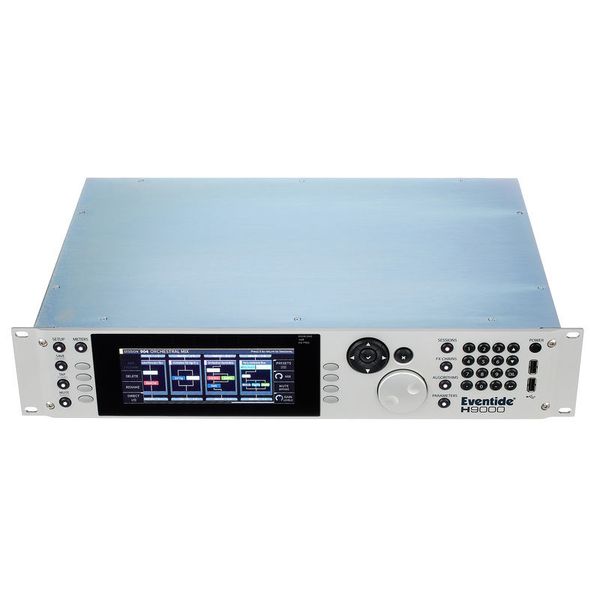
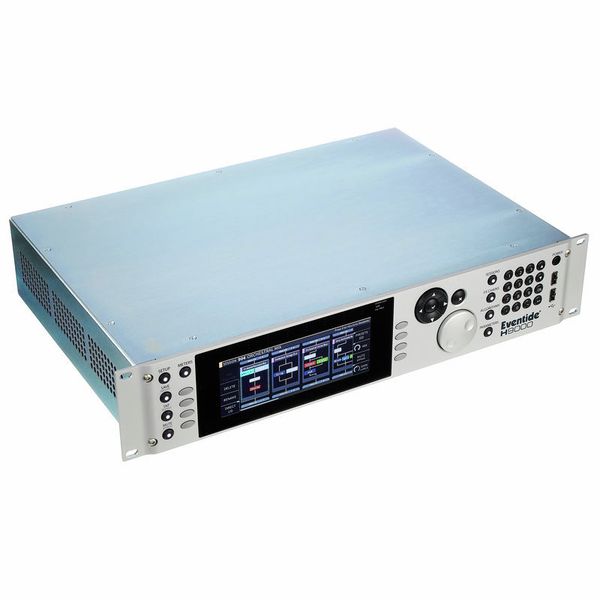
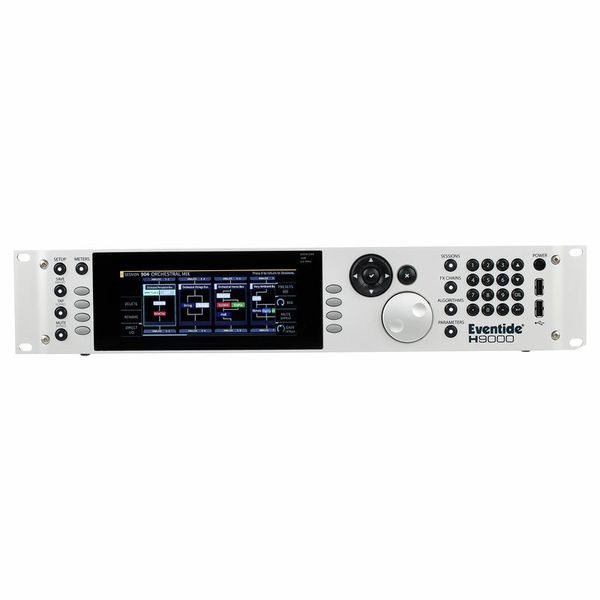
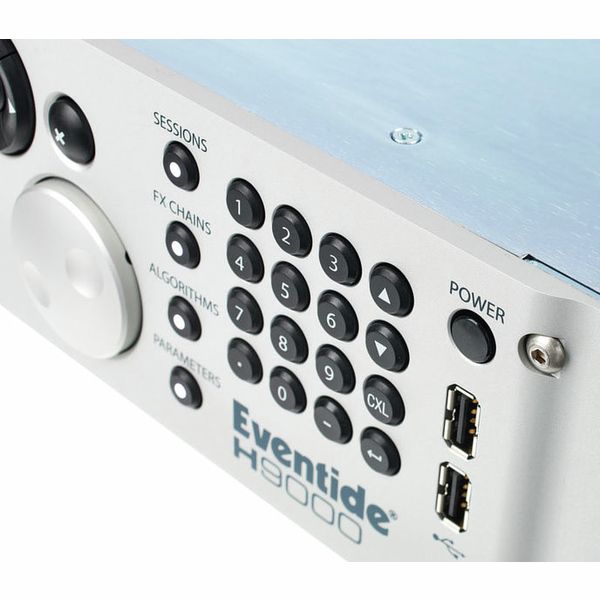
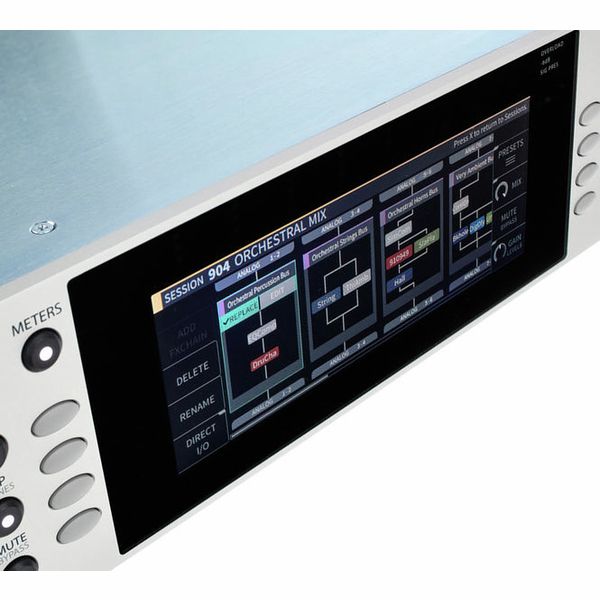
Le H9000 d’Eventide est un appareil multi-effets qui se pose également en successeur du H8000FW. Ses 4 processeurs quad-core ARM permettent d’utiliser jusqu’à 16 effets stéréo simultanément. Le H9000 intègre d’ailleurs une nouvelle fonction appelée « FX Chain » qui permet, comme son nom l’indique, de créer jusqu’à 4 chaînes avec un maximum de 4 algorithmes pour chacune. Au sein de chaque chaîne, les effets peuvent être organisés de multiples manières, en série ou en parallèle. La face avant comporte un large écran couleur, entouré de part et d’autre par des boutons souples. L’interface utilisateur est plutôt classique, avec des touches de fonctions rétro-éclairées. L’application Emote offre non seulement le contrôle total sur toutes les fonctionnalités de l’appareil, mais également une ergonomie proche de celui-ci. On reste donc en terrain connu !

Processeur multi-effets Eventide H9000 Harmonizer

Nombreuses fonctionnalités et riche connectique

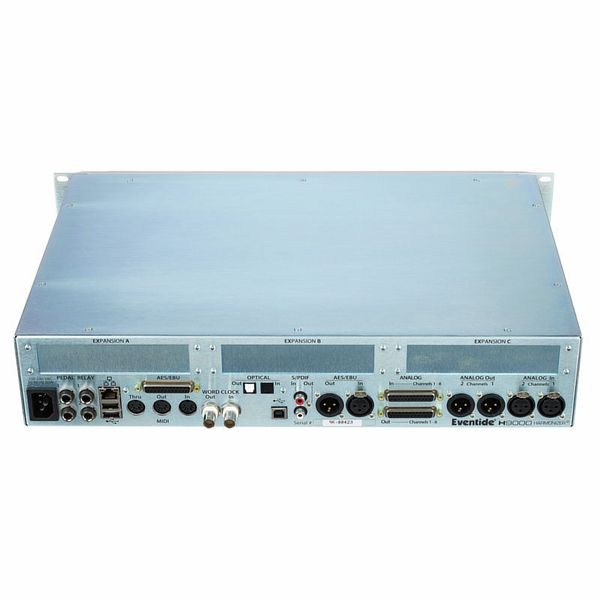
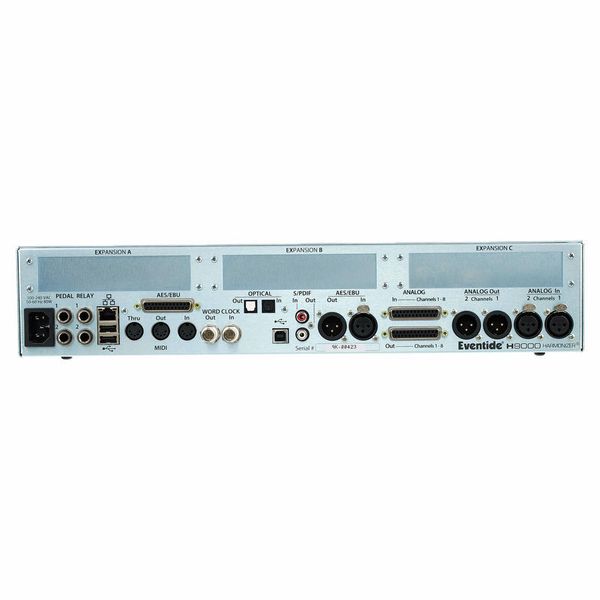
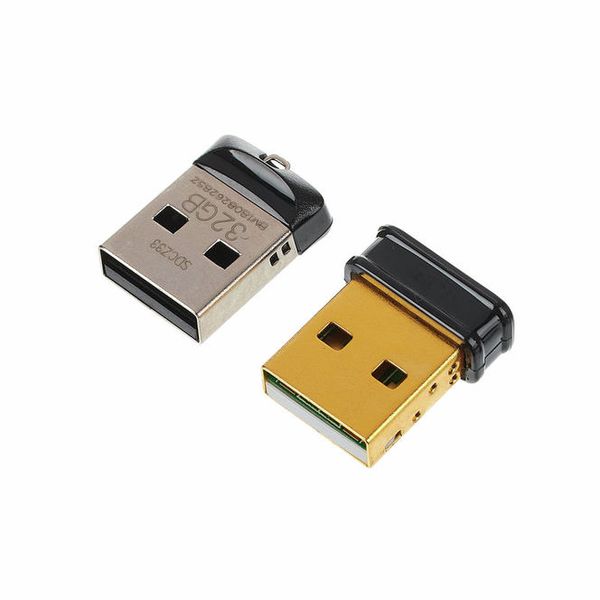
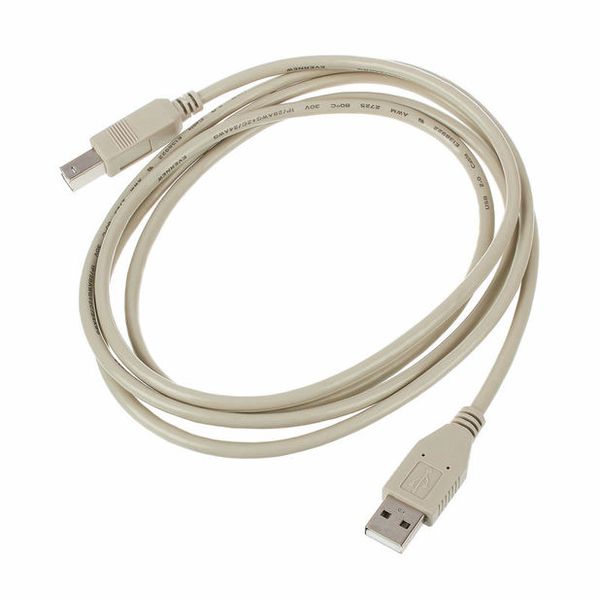
Le multi-effets H9000 fonctionne sur plusieurs canaux. Dans un rack, il occupe deux unités de hauteur. Il offre de nombreuses possibilités de connexion, d’extensions et de mises en réseau. Sur la face arrière, on trouve huit entrées et sorties analogiques, et huit connexions numériques AES au format sub-D. Les canaux AES 1 et 2 et les deux premières entrées et sorties analogiques sont aussi disponibles au format XLR. D’autres connexions numériques sont disponibles aux formats SPDIF et ADAT. L’appareil propose également des emplacements pour des cartes d’extension H9000 pour Pro-Tools, MADI, Dante, Ravenna et AES67, chacune pouvant traiter jusqu’à 32 canaux en entrée et en sortie. Le H9000 peut travailler entre 44,1 et 96kHz, sauf en ADAT (appareil non-compatible S/MUX). La connexion à un ordinateur se fait via USB, LAN ou WLAN (dongle fourni).

Affichage du multi-effets l’Eventide H9000 Harmonizer

Un investissement pour les utilisateurs exigeants

Le H9000 inclut une très vaste bibliothèque constituée de nouveaux effets, de classiques de chez Eventide et de l’ensemble des effets H9, soit un total de 1600 algorithmes. Il n’a donc strictement rien à envier à prédécesseurs, d’autant que la qualité audio de l’ensemble est tout à fait remarquable. Grâce à l’application Emote, à la fonction FX-Chain et aux capacités de calcul augmentées, tous ces effets peuvent être dorénavant employés de manière tout à fait nouvelle. L’appareil peut aussi servir d’interface audio-numérique USB de 16 canaux. La fonction « Direct I/O » permet de superviser toutes les options de routage des huit entrées et sorties analogiques. Ce sont donc non seulement 8 préamplis de haute qualité qui viennent s’ajouter à votre configuration existante, mais aussi une véritable patchbay. Son prix destine toutefois le H9000 à un public de professionnels.

Interface utilisateur du processeur multi-effets Eventide H9000 Harmonizer

À propos d'Eventide

Eventide est une entreprise installée aux États-Unis et fut l'une des pionnières de l'audio-numérique. Active depuis le début des années 70, elle développait des appareils d'effets numériques pour la radio. En 1974 elle donna naissance au H910, un pitch shifter déjà révolutionnaire pour son époque. Mais c'est véritablement avec le H3000, sorti en 1986, qu'Eventide transforma profondément le monde des effets numériques. L'appareil connut un grand succès aussi bien dans les studios que sur scène et fut très apprécié des musiciens professionnels. Au cours des années suivantes, les ingénieurs d'Eventide n'ont eu de cesse de faire évoluer le concept d'origine pour aboutir finalement au fleuron actuel de la marque, le H9000. Depuis 2007, l'entreprise développe également des processeurs d'effets au format pédale à destination des guitaristes et des claviéristes. Jusqu'à aujourd'hui, les algorithmes d'Eventide sont considérés comme les meilleurs du marché.

L’application Emote

Le pilotage à distance se fait soit par l’application autonome Emote, compatible MacOS et Windows, soit par un plugin (VST, AU, AAX). L’application Emote propose une interface utilisateur confortable et qui simplifie grandement les opérations. On peut ainsi transférer par simple glisser-déposer des presets, des algorithmes, des chaînes d’effets et même des configurations complètes de l’explorateur vers la fenêtre principale. Une série d’onglets permet d’accéder directement aux menus de configuration, aux ensembles d’effets et aux paramètres de l’appareil. Ces derniers peuvent aussi être pilotés en MIDI ou USB. D’un click de souris, on ouvre un menu contextuel qui fournit entre autres des options d’affectation. Les paramètres peuvent alors être également automatisés à partir d’une STAN.

Face arrière et connectique du processeur multi-effets Eventide H9000 Harmonizer

1 Évaluations des clients

1 / 5

Utilisation

Caractéristiques

Son

Qualité de fabrication

1 Commentaire

google translate gb
Une erreur est malheureusement survenue, veuillez réessayer ultérieurement svp.
e
Plugins are better, stay away.
ekoloud 14.11.2018
So how to start,
I was excited about the arrival of this machine to my studio but, unfortunately, did not last long.
I really wanted to be amazing, I really wanted to keep it but, you will see why I had no other option but return it.
Because its a complex machine I first read the manual. Seems an easy to operate device and the software (terrible looking and not user-friendly at all) helps to be faster to edit things. The display has a low resolution and does not look nice for today standards and for this price.
With time I felt comfortable enough to be fast using only the hardware dials and that is the pleasant side of using a machine like this.
The device looks great and the buttons and jog wheel are super nice as well however, on the first day of operation I started to hear an annoying sound from the jog wheel...there was a loose screw inside!! For a machine this price that is quite unacceptable. The fix is super easy but it's so unreachable that my only option was to send it back to be opened by a professional. That was out of the question so, moving on to the sound.
After I set it up trough adat and the machine was finally sounding, I decided to try the plates. I am a reverb freak and wanted to see how the h9000 could hold on against the Uad Emt plate. Guess what? The h9000 had no chance against the plugin. The h9000 plate algorithm is not nice, the tails sound very springy and metallic in a bad way and no matter how hard I tried to tweak the settings I could not get it to sound as good as the Uad. I mean even a free plate plugin from sound toys sounded better then the Eventide.
I thought probably the plates were not the h9000 biggest selling point and I moved on to halls and rooms.
Here, the comparison was again with the Uad but this time with a Lexicon. While I could have similar results to my ears Uad was still a winner. Again that springy tail was not as obvious as on the plate but was still there. Maybe you could find a use to them but hey, for 7000¤ sounding similar to a plugin is not really favouring the hardware.
I moved on again and tried the chorus. Again plugin seems to be a winner.
Moved to Distortion. Sound toys was a winner without much effort.My 20 year old Korg AM8000R is better in most cases also(tip tip, it costs around 150¤today)
I was started to get very sad and disappointed...there was nothing so far that this machine could do exceptionally well.
I thought "ok eventide is known as a harmonizer so, at least the harmonizer must be great". Reality is, Eventide could not even copy their very own harmonizer h910 to the h9000. From what I hear even eventide plugin of the h910 sounds better than the algorithms in the h9000, for real!!
So at this point, I tought there really must be something wrong with the algorithms porting onto this machine. Everybody speaks wonders of the h9 pedals and the h8000 but this one has something wrong with it.
I read that porting the algorithms to this ARM-based machine is a very risky process. Also read somewhere that Eventide had to create a A.I to go through all the presets and compare if they sound the same as in the original machines. That for me already sounds very risky and prone to problems.

When I inquired eventide with my dissatisfaction and question them about the future of the machine they were very reserved about it.
They also told me they are thinking about porting some of their plugins into the h9000. I asked what is the big advantage of having the h9000 if I can run the plugins in the computer? Or what is the future plans with this machine? Did not get an answer on that. Too bad, they had a chance to convince me keeping it.

So yeah, 7000€ (in 2018) for a efx processor that does not even sound as good as plugins? you have to be crazy to get one.

What went wrong ? I don't know. Will it getter better? It's better they do it fast and come with amazing and exclusive h9000 algorithms. A few crashes and other inconveniences were also observed where the machine had to restart but, no big deal here I guess. Just updates needed.

Conclusion:
The H9000 has great potential according to the specs with the expansion cards and upgradable processors but needs to mature first.
Very nice looking machine. Nice feeling controls. Poor display resolution. Sounds bad. Maybe all the issues I reported here will easily be fixed with coming updates so standby on this machine, let pro reviews come out wait 2 or 3 years and test it in a shop with some good plugin to compare the machine with.
One last word, I think now almost in 2019 with the advance on computer power and more people developing amazing plugins i think the era of "hardware sounds better" is almost over. There are some cases where hardware still has the edge but that might decrease over time.
I will wait and maybe give it a try again in a few years.


Thank you Thomann for your return service.
Utilisation
Caractéristiques
Qualité de fabrication
Son
251
50
Signaler l'évaluation

Signaler l'évaluation